How Often Must Fire Protection Systems Be Tested in Los Angeles?
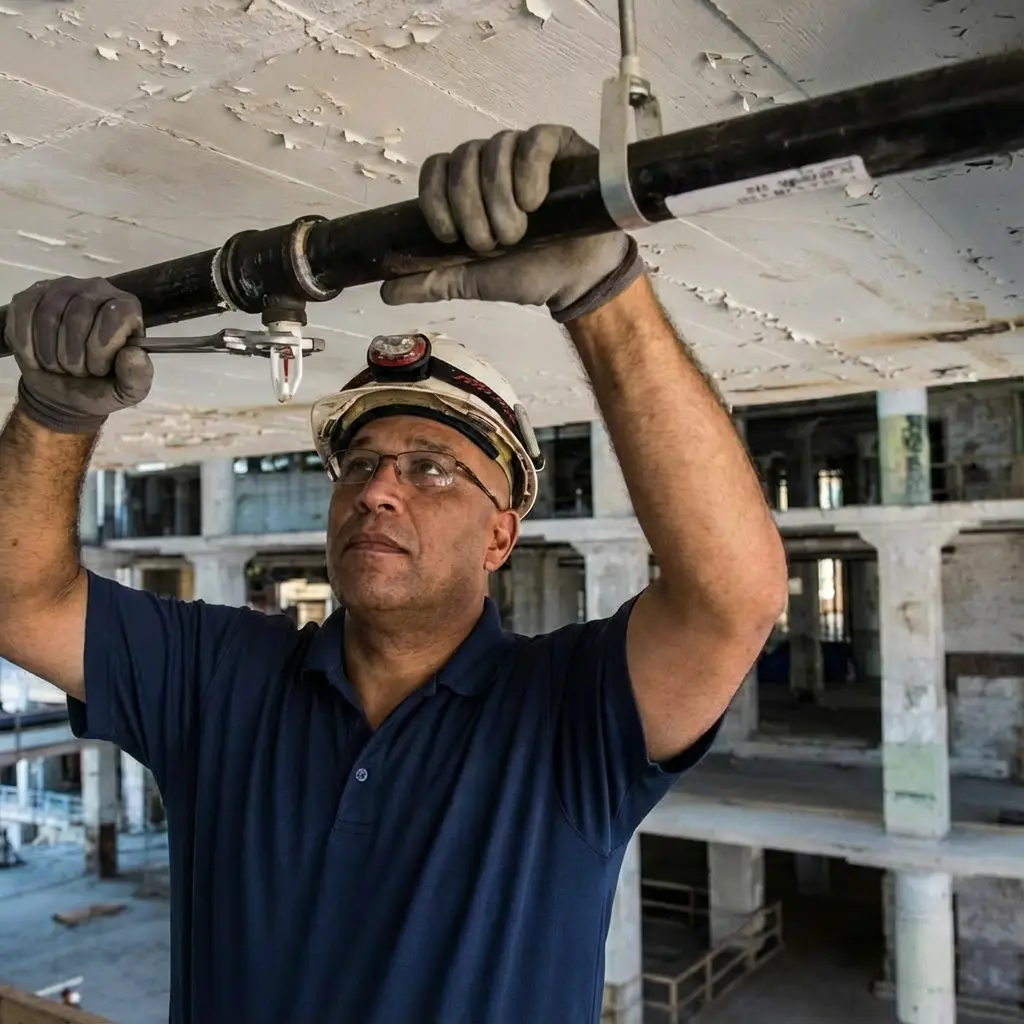
If you own or manage a commercial building in Los Angeles, you already know that LAFD Chief's Regulation 4 requires annual fire protection system testing. But the NFPA standards that govern how each system is actually tested have their own schedules — some weekly, some monthly, some every five years. Missing any of these intervals can mean a failed test, a non-compliant building, or an LAFD Notice to Comply.
This guide breaks down the required testing frequencies for every fire protection system covered under Regulation 4, organized by system type and the NFPA standard that applies.
LAFD Regulation 4: The Annual Reporting Requirement
Regulation 4 applies to commercial and multi-family residential buildings (apartments, condos, mixed-use) in the City of Los Angeles that have fire protection systems. The program requires building owners to have all covered systems tested at least annually by a state-licensed C-16 fire protection contractor and to file the results to The Compliance Engine (Brycer) within 7 days of the test.
The systems covered are: fire sprinklers, fire alarms, fire pumps, standpipes, emergency power generators, and emergency lighting and exit signs. Each of these systems also falls under one or more NFPA standards that dictate exactly what gets tested and how often.
Fire Sprinkler Systems — NFPA 25
Fire sprinkler testing follows NFPA 25 (Standard for the Inspection, Testing, and Maintenance of Water-Based Fire Protection Systems). NFPA 25 requires inspections and tests at multiple intervals:
| Frequency | What Is Tested |
|---|---|
| Weekly / Monthly | Gauge readings on wet and dry system risers; control valve position verification; fire department connection visual inspection |
| Quarterly | Water flow alarm test (open inspector test connection, confirm alarm activates within 90 seconds); control valve operation (full close and open); supervisory signal test |
| Annual | Full inspector test at each riser (flow water until alarm trips); main drain test (static and residual pressure); anti-freeze solution specific gravity check; fire department connection check valve test; spare sprinkler head inventory audit |
| 5-Year | Internal pipe inspection for obstructions (required under both NFPA 25 and California Title 19); obstruction investigation if foreign material is found; gauge calibration or replacement |
The annual test is what satisfies the Reg 4 filing requirement. The 5-year internal inspection is a separate California Title 19 obligation and is typically scheduled alongside the annual test to minimize building disruption.
Fire Alarm Systems — NFPA 72
Fire alarm testing follows NFPA 72 (National Fire Alarm and Signaling Code), Chapter 14. The key testing intervals for commercial buildings are:
| Frequency | What Is Tested |
|---|---|
| Semiannual | Visual inspection of all initiating devices (smoke detectors, heat detectors, pull stations), notification appliances (horns, strobes), and wiring connections |
| Annual | Functional test of every device — each smoke detector is individually activated and verified; each pull station is tripped; each notification appliance is confirmed audible/visible; FACP functions are tested; battery load test; ground fault test; duct detectors tested with canned smoke |
| As Needed | Sensitivity testing of smoke detectors (within the first year of installation and every alternate year thereafter, or per manufacturer schedule); battery replacement per manufacturer schedule (typically every 3–5 years for sealed lead-acid) |
The annual functional test is the Reg 4 filing item. Buildings with 24/7 monitoring have additional signal verification checks each time the monitoring service processes an alarm.
Fire Pumps — NFPA 25 Chapter 8
Fire pump testing follows NFPA 25 Chapter 8. Fire pumps have the most frequent testing requirement of any Reg 4 system:
| Frequency | What Is Tested |
|---|---|
| Weekly | No-flow (churn) test — start the pump and run at shutoff (churn) pressure for at least 10 minutes; record suction and discharge pressure; verify automatic start on pressure drop |
| Monthly (Diesel) | Diesel engine run for at least 30 minutes; check oil pressure, coolant temperature, battery voltage, fuel level; record all readings |
| Annual | Full-flow test measuring pump performance at shutoff, 100%, and 150% of rated capacity using calibrated flow meters (Hose Monster or equivalent); compare results to original acceptance test curve; test jockey pump operation |
The annual full-flow test is what gets filed under Reg 4. Weekly churn tests are the building owner's responsibility (or delegated to a maintenance contractor) and are recorded in a pump room log.
Emergency Power & Lighting — NFPA 110 & NFPA 101
Emergency power and lighting testing is governed by two standards: NFPA 110 for generators and NFPA 101 for battery-powered emergency lighting and exit signs.
| System | Frequency | What Is Tested |
|---|---|---|
| Emergency Lighting | Monthly | 30-second functional test — press test button, confirm illumination on all emergency light heads and exit signs |
| Emergency Lighting | Annual | 90-minute full battery discharge test per NFPA 101; lights must maintain at least 1 foot-candle on egress paths for the full duration; replace failed batteries |
| Generator | Monthly | No-load exercise run for at least 30 minutes under NFPA 110; verify automatic transfer switch operation; check fuel, coolant, oil, and battery |
| Generator | Annual | Load bank test at 30% or more of nameplate rating for at least 2 continuous hours per NFPA 110 Chapter 8; verify voltage and frequency stability under load; record all data in the NFPA 110 maintenance log |
Both the 90-minute battery test and the annual generator load bank test are Reg 4 filing items. Monthly tests are documented internally by the building engineer or property manager.
Standpipe and Hose Systems
Standpipe testing follows NFPA 25 Chapter 13. Commercial high-rises and many multi-family buildings in Los Angeles have Class I or Class III standpipe systems.
| Frequency | What Is Tested |
|---|---|
| Quarterly | Visual inspection of hose valves, connections, and caps; verify gauges are readable |
| Annual | Flow test at the top-most outlet — confirm adequate pressure and flow at the most hydraulically remote point; pressure-reducing valve calibration check |
| 5-Year | Hydrostatic test at 200 psi (or 50 psi above maximum working pressure, whichever is higher) for 2 hours; hose connection test |
The annual flow test is the Reg 4 filing item for standpipes.
Backflow Preventers
Backflow prevention assemblies on fire protection supply lines must be tested annually by a certified backflow tester. The test confirms the device prevents contaminated water from flowing back into the public water supply — a public health requirement enforced by both the LAFD and the Los Angeles Department of Water and Power (LADWP).
| Frequency | What Is Tested |
|---|---|
| Annual | Differential pressure test of check valves and relief valve; verify opening point of relief valve; confirm no leakage at the test cocks; results reported to LADWP and filed under Reg 4 |
What Happens If You Miss a Testing Deadline?
When annual testing results are not filed on time, The Compliance Engine (Brycer) flags the building as non-compliant. The LAFD's Reg 4 Unit may issue a Notice to Comply, which starts a 30-day correction window. If the deficiency is not resolved, the building faces administrative fines and potential misdemeanor charges under LA Municipal Code SEC. 57.110.4, with mandatory minimums of $500 per day for fire protection system violations.
If your building has failed a Reg 4 test, deficiencies must be repaired and the system retested within the same 30-day window. The retest results are filed as an updated submission to Brycer.
Quick Reference: All Systems at a Glance
| System | NFPA Standard | Reg 4 Filing Interval | Other Key Intervals |
|---|---|---|---|
| Fire Sprinklers | NFPA 25 | Annual | Quarterly flow alarm; 5-year internal pipe |
| Fire Alarms | NFPA 72 | Annual | Semiannual visual inspection |
| Fire Pumps | NFPA 25 Ch. 8 | Annual | Weekly churn; monthly diesel run |
| Emergency Lighting | NFPA 101 | Annual | Monthly 30-second functional test |
| Generator | NFPA 110 | Annual | Monthly no-load exercise |
| Standpipes | NFPA 25 Ch. 13 | Annual | Quarterly visual; 5-year hydrostatic |
| Backflow Preventers | LADWP / AWWA | Annual | — |
Need to schedule your annual Regulation 4 testing? FastReg4Tests handles testing for sprinklers, alarms, fire pumps, standpipes, and emergency power and lighting, with same-week scheduling available for buildings that are past due or approaching a deadline. Contact us at (310) 945-2367 or use our online form to get started.
← Back to Blog